Protein
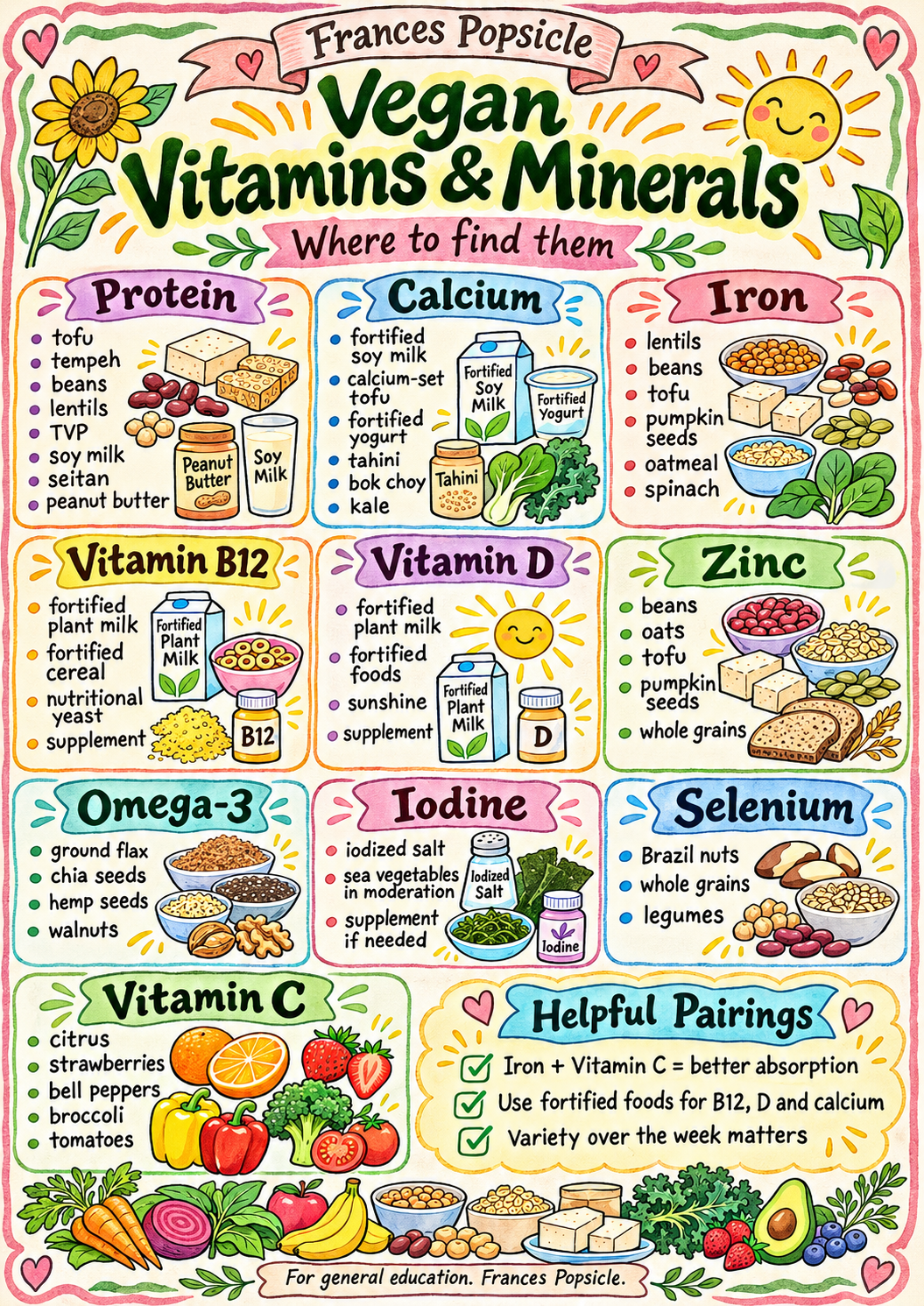
Tofu, tempeh, TVP, beans, lentils, soy milk and seitan. Amounts matter, especially in a meal built mainly around vegetables or starch.
FROM THE FAMILY KITCHEN
A colorful kitchen reference for plant-based family meals.
A vegan diet can be nutritionally adequate when planned with reliable sources of key nutrients. This chart shows common foods, but a food being listed does not mean a typical portion meets a full daily requirement.
Open the full-resolution poster
Tofu, tempeh, TVP, beans, lentils, soy milk and seitan. Amounts matter, especially in a meal built mainly around vegetables or starch.
Calcium-set tofu, calcium-fortified soy milk, fortified yogurt and some greens. Check labels and tofu coagulants.
Lentils, beans, tofu and seeds supply iron. Include peppers, citrus, tomatoes or other vitamin C foods nearby.
Use a dependable supplement or adequate amounts of foods specifically fortified with B12. Plain nutritional yeast is not automatically fortified.
Fortified foods or supplements may be needed. Sunshine is variable and not a reliable year-round strategy.
Iodized salt or a suitably dosed supplement can provide iodine. Seaweed iodine content varies greatly, so avoid assuming it is a safe consistent dose.
Ground flaxseed, chia, hemp and walnuts provide ALA. An algae-derived EPA/DHA supplement is an optional consideration.
Legumes, grains, seeds and nuts supply these nutrients. Brazil nuts can contain highly variable and sometimes very large amounts of selenium.
Across the day include substantial protein-rich foods, vegetables and fruit, sufficient starches and fats, plus dependable calcium, B12, vitamin D and iodine sources. Requirements vary with age and circumstances. Do not rely on dinner alone to determine a person's nutrient intake.
Further reading: NIH Vitamin B12, NIH Iodine, NIH Vitamin D.